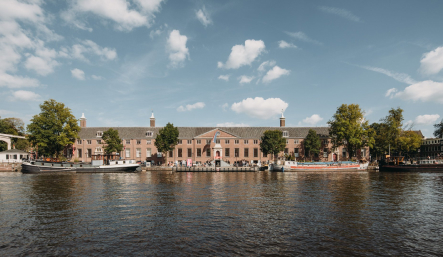
A Tribute to the Chicano Movement in the United States
Today, H’ART Museum presents Radical Histories: Chicano Prints from the Smithsonian American Art Museum, an exhibition that brings together artistic innovation and social engagement. Featuring 60 works, it shows how Mexican American artists have used printmaking to develop a distinct visual, graphic language connected to political advocacy, cultural expression, and historical reflection.
Embracing the term ‘Chicano’ as a marker of identity and empowerment, these artists explore themes of activism, political advocacy, community building, cultural reclamation, and commemorative portraiture. Spanning the period from 1960 to 2018, Radical Histories offers a perspective on a movement that has had a lasting impact on both art and society.
With Radical Histories, H’ART Museum introduces Dutch audiences to a chapter of American art history rarely seen in Europe. Previously shown at Colby College Museum of Art and The Huntington, the exhibition is on view from today through September 6. It marks the second collaboration between H’ART Museum and the Smithsonian American Art Museum and is presented alongside American Myth & Memory: David Levinthal Photographs.
Exhibition themes
Since the 1960s, Chicano artists have been known for their striking political posters and prints, offering fresh perspectives on current events and history. The exhibition presents their work through five themes.
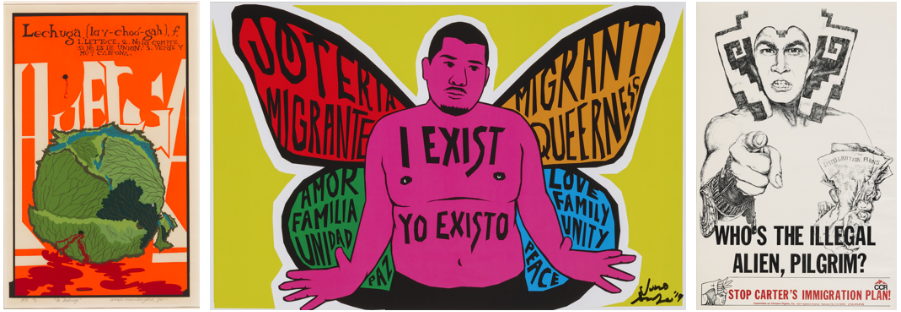
In ‘Together we Fight’, labor union actions take center stage. Powerful protest art in black and red captures both the despair and determination of workers. ‘¡GUERRA NO!’ features compelling graphic works opposing U.S. military interventions in countries including Vietnam, El Salvador, Chile and Iraq. Artists create a counter-narrative to dominant media images and give voice to communities affected by these conflicts. A separate section addresses violence and humanitarian crises along the border between Mexico and the United States. Recurring symbols such as the monarch butterfly appear as metaphors for migration as a natural and deeply human phenomenon, despite political borders.
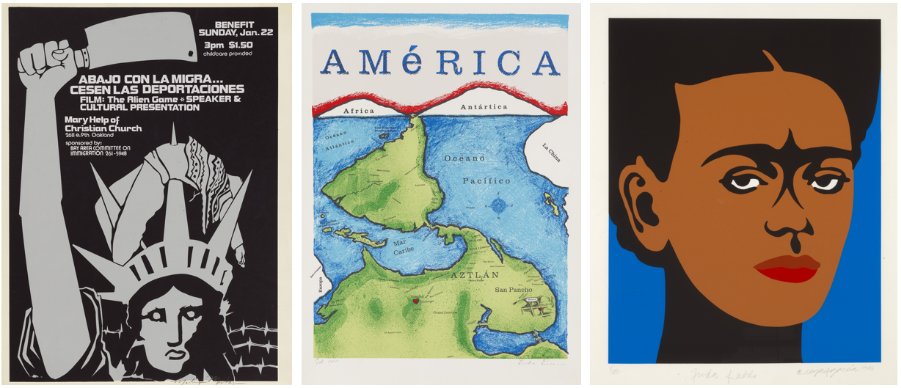
Under the theme ‘Rethinking America’, Chicano artists critique and question national myths and historical landmarks, including Columbus Day. The final chapter, ‘Changemakers’, centers on portraits of activists, political prisoners, attorneys, artists, and other key figures who have been ‘forgotten’ or excluded from official history books yet have played a defining role in social change in the United States.
Chicano Artists
Radical Histories features work by key figures of the Chicano movement, drawn directly from the collection of the Smithsonian American Art Museum. Artists such as Malaquías Montoya (1938), Rupert García (1941), Yolanda López (1942–2021), and Ester Hernández (1944) are considered pioneers who uniquely intertwine art and activism. Their graphic works are not only artistically innovative but also function as direct political instruments: through printmaking techniques, images can be rapidly disseminated and deployed in strikes, protests, and civil rights campaigns. By consciously operating at the intersection of art, identity, and activism, their work is now recognized both as an aesthetically influential movement and as a crucial visual engine behind social change. It is precisely this combination of artistic innovation and political impact that makes this group so exceptional.
Malaquías Montoya (1938): ‘The form of the poster allows me to awaken consciousness, to reveal reality and to actively work to transform it. What better function for art at this time?’
Note to editors, not for publication
Image captions:
(1) left to right: Amado M. Peña Jr., La Lechuga, 1974, screenprint on paper, Smithsonian American Art Museum, gift of Amado M. Peña, Sr. and Maria Peña, 1996.47.1, © 1974, Amado M. Peña, Jr.; Julio Salgado, Queer Butterfly: I Exist, 2019, inkjet print on paper, Smithsonian American Art Museum, museum purchase through the Lichtenberg Family Foundation, 2020.37.5, © 2020, Julio Salgado; Yolanda López, Who’s the Illegal Alien, Pilgrim?, 1978, lithograph on paper, Smithsonian American Art Museum, museum purchase through the Samuel and Blanche Koffler Acquisition Fund, 2020.43.2, © 1978, Yolanda López. (2) left to right: Malaquias Montoya, Abajo con la migra, 1977, screenprint on paper, Smithsonian American Art Museum, gift of the Margaret Terrazas Santos Collection, 2019.52.7, © 1977, Malaquias Montoya; Linda Zamora Lucero, América, 1986, screenprint on paper, Smithsonian American Art Museum, gift of Gilberto Cárdenas and Dolores García, 2019.51.33, © 1986, Linda Lucero; Rupert García, Frida Kahlo, 1990, screenprint on paper, Smithsonian American Art Museum, gift of the trustees of the Corcoran Gallery of Art (Gift of Mr. and Mrs. Gerald D. Kohs), 2020.20.102, © 1990, Rupert García.
Contact H’ART Museum
Press & Marketing Communications Department
Madeline van Vliet and Elianne Koevoets
+31 (0)20 626 81 68 | pressoffice@hartmuseum.nl